Why Casino Games Feel Less Random Than They Really Are
Fresh Game Guide explains how casino games actually work — from rules and probabilities to house edge, RTP, volatility and common strategy myths.
Start With the Game, Not the Hype
Straightforward explanations for players who want to understand what's happening behind the screen or across the table.
A roulette wheel lands on red five times in a row. A slot stays quiet for twenty spins and then suddenly produces several wins close together. A blackjack table seems unusually generous for half an hour.
It is surprisingly easy to look at moments like these and feel that something has changed.
Maybe black is now more likely. Maybe the slot is finally ready to pay. Maybe the table has become "hot."
There is a simpler explanation: randomness often does not look random.
Real random sequences contain clusters, streaks, repetition and long periods where very little seems to happen. Understanding that difference between what probability actually does and what our intuition expects it to do makes casino games much easier to understand.
Random Does Not Mean Even
When people imagine randomness, they often picture something beautifully balanced.
Red, black, red, black. Win, loss, win, loss. A little success followed by a little failure.
Real randomness has no reason to arrange itself so neatly.
Imagine flipping a fair coin ten times. A sequence such as:
H – T – H – T – T – H – T – H – H – T
looks comfortably random.
But this sequence:
H – H – H – H – T – T – H – H – T – H
can be produced by exactly the same fair coin.
The second sequence simply feels more suspicious because the human brain is exceptionally good at noticing patterns — even when those patterns do not tell us anything useful about what happens next.
Why Streaks Feel So Important
Casino games give us constant feedback. Every spin, hand or roll produces another result, so the brain immediately starts comparing the newest outcome with the ones that came before it.
That creates familiar observations:
- Red has appeared several times in succession.
- A slot has not produced a meaningful win for a while.
- A blackjack dealer has won several hands in a row.
- A particular number seems to appear unusually often.
The observations themselves can be completely accurate. The mistake happens when we assume that the pattern must change the probability of the next independent event.
A streak describes the past. It does not automatically predict the future.
The Gambler's Fallacy
One of the clearest examples appears in roulette.
Suppose a European roulette wheel has produced red six times consecutively. It is tempting to think:
Black must be due.
But the wheel does not remember the previous six spins.
A European roulette wheel contains 18 red pockets, 18 black pockets and one green zero. On a fair wheel, the probability of black on the next spin therefore remains:
18 / 37 ≈ 48.65%
The previous reds do not create a debt that the wheel must repay.
This belief that one independent result becomes more likely because the opposite result occurred repeatedly is known as the gambler's fallacy.
Long Streaks Are Unusual — But Not Impossible
There is an important distinction here.
Getting six reds in a row before the first spin takes place is much less likely than getting one red. But once five reds have already happened, those five outcomes are history. They do not alter the physical composition of the wheel for spin number six.
This is why two questions that sound similar are mathematically different:
- What is the probability of getting six reds in succession?
- After five reds have already occurred, what is the probability that the next spin is red?
The first question concerns an entire sequence. The second concerns one new event.
Confusing the two is one reason casino streaks can feel more informative than they really are.
House Edge: The Number That Matters Over Time
Randomness explains individual results, but casino games also have rules that determine their long-term mathematical structure.
One of the most useful concepts is the house edge.
House edge represents the casino's theoretical mathematical advantage over a very large number of wagers. It does not mean the casino takes exactly that percentage from every player or every session.
Consider European roulette again.
A straight-up bet on one number pays 35 to 1, while there are 37 possible pockets. That difference creates a theoretical house edge of approximately 2.70%.
Over a short session, almost anything can happen. A player can finish far ahead, lose quickly or stay close to even.
Over increasingly large numbers of independent wagers, however, the mathematical structure of the game becomes more important.
Short-Term Results and Long-Term Mathematics Are Different Things
This distinction is essential.
A game can have a known house edge while still producing wildly different short-term outcomes for different players.
That is not a contradiction.
House edge describes an expected long-run relationship. It does not provide a schedule for when wins and losses must occur.
A 2.70% house edge does not mean that every €100 session ends with exactly €97.30 remaining. A player could finish with €150, €20 or nothing at all.
The percentage becomes meaningful across a much larger volume of wagering, not as a prediction for one evening.
RTP Is Often Misunderstood in the Same Way
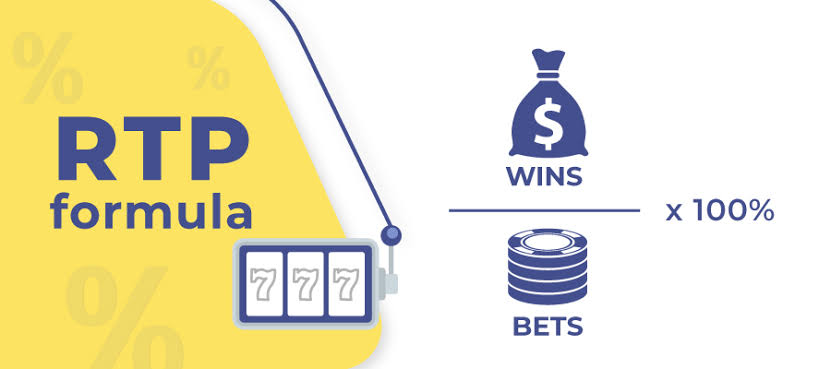
Slots usually introduce another number: Return to Player, or RTP.
If a game has a theoretical RTP of 96%, people sometimes interpret that as:
If I put €100 into the game, I should receive €96 back.
That is not what RTP promises.
RTP is a theoretical long-term percentage calculated across a very large number of game rounds under defined conditions. Your personal session is only a tiny sample of that process.
A player can therefore experience results dramatically above or below the theoretical RTP without the RTP figure itself being incorrect.
RTP Does Not Tell You When a Win Is Coming
Another common assumption is that a game that has recently paid very little must somehow compensate soon.
For independently generated game rounds, that logic does not follow.
If the outcomes are independent, a poor run does not create an obligation for the next round to be favourable. Likewise, a recent large win does not necessarily make the next result worse.
RTP describes long-term mathematics. It is not a meter showing how much a particular machine currently "owes."
Then What Is Volatility?
Two games can have similar theoretical RTP figures while feeling completely different to play.
That is where volatility, sometimes called variance, becomes useful.
In simple terms, volatility describes how unevenly outcomes may be distributed.
- Lower-volatility games generally produce smaller winning outcomes more frequently.
- Higher-volatility games may produce longer quiet periods combined with less frequent but potentially larger outcomes.
This does not tell you whether you will win. It describes the general shape of the game's risk and reward distribution.
For understanding how a slot may feel during actual play, knowing both RTP and volatility is more useful than looking at RTP alone.
Why Near Misses Get Our Attention
Another interesting part of game design is the near miss.
Imagine a slot showing two matching symbols while the third lands just outside the winning position. Emotionally, that can feel very different from a completely unrelated losing combination.
Mathematically, however, a loss remains a loss.
Humans naturally assign meaning to outcomes that appear close to success. That makes near misses memorable even though being visually close to a winning result does not necessarily mean that a future win has become more likely.
The same psychological effect appears outside gambling. Missing a train by ten seconds feels more significant than missing it by twenty minutes, even though the practical result is identical: the train left without you.
Blackjack Is Different — Up to a Point
Blackjack is useful because not every casino game works in exactly the same way.
In roulette, choosing red instead of black does not create a strategic mathematical advantage. In blackjack, the player's decisions can affect expected outcomes.
Whether you hit, stand, double or split in a particular situation matters because the available choices have different mathematical expectations.
That is why basic blackjack strategy exists.
It uses the player's cards, the dealer's visible card and the rules of the game to identify mathematically preferable decisions.
But there is an important boundary:
Better decisions do not turn blackjack into a predictable game.
Basic strategy can reduce avoidable mistakes and, depending on the rules, reduce the house advantage. It cannot determine which card will appear next or guarantee that an individual hand will win.
Strategy and Prediction Are Not the Same Thing
This distinction applies beyond blackjack.
A useful strategy can help answer questions such as:
- Which decision has the better mathematical expectation?
- Which version of a game has more favourable rules?
- How much risk does a particular bet introduce?
- How quickly can a chosen stake size consume a playing budget?
A strategy cannot honestly answer:
- Which roulette number will appear next?
- When a slot is about to produce a large win?
- Whether the next blackjack hand will be profitable?
- When a losing streak must end?
Understanding that boundary is one of the simplest ways to separate useful game knowledge from gambling myths.
Why Betting Systems Cannot Rewrite Probability
Roulette has produced countless betting systems built around increasing or changing stakes after certain outcomes.
The details vary, but the underlying problem is usually the same: changing the size or sequence of bets does not change the probability attached to the wheel itself.
A staking system can change how wins and losses are distributed across a session. It can also change how quickly the size of a wager grows.
What it cannot do is remove the zero from a European roulette wheel or change the underlying probability of red, black or an individual number.
Money management can help control exposure. It should not be confused with creating a mathematical advantage where none exists.
The Brain Loves a Story
There is a reason all of this feels counterintuitive.
Humans are built to look for causes.
If something happens repeatedly, we naturally search for an explanation. If a pattern suddenly breaks, we want to know why. That instinct is enormously useful in everyday life.
Random systems are awkward because sometimes the correct explanation really is:
That sequence happened because sequences like that sometimes happen.
No hidden cycle is required.
No machine has to be "hot."
No roulette colour has to be "due."
And no previous loss forces the next game round to correct it.
Four Numbers Worth Understanding
You do not need advanced mathematics to evaluate most casino games more clearly. Four concepts already explain a great deal:
- Probability — how likely a particular outcome is under the rules of the game.
- House edge — the casino's theoretical long-term mathematical advantage.
- RTP — the theoretical proportion of wagers returned to players across a very large sample of game rounds.
- Volatility — how concentrated or uneven the distribution of outcomes may be.
None predicts what will happen to you next.
Together, however, they provide a much clearer picture of what kind of game you are looking at.
A Better Way to Look at Casino Games
The useful question is rarely:
What is the game going to do next?
A better set of questions is:
- What are the actual rules?
- What probabilities do those rules create?
- Does player choice affect the mathematical expectation?
- What is the house edge or theoretical RTP?
- How volatile can the outcomes be?
- How much am I comfortable losing before I stop?
Those questions cannot make a random outcome predictable.
They can make the game itself much less mysterious.
The Most Useful Strategy Is Knowing What Cannot Be Controlled
Casino games are designed around uncertainty. That uncertainty is part of what makes them entertaining, but it is also what makes short-term results unreliable.
Learning the mathematics does not reveal a secret route around randomness.
It does something more useful: it shows where randomness ends, where game rules matter and where our intuition can mislead us.
A streak can be real without being predictive. A strategy can improve a decision without guaranteeing its outcome. RTP can describe millions of rounds without describing your next twenty.
Once those distinctions are clear, casino games begin to look less like mysterious systems waiting to be decoded and more like what they actually are:
games of probability, played one uncertain result at a time.
One useful gaming insight, occasionally.
Get new strategy explainers, game mechanics, probability breakdowns and selected gaming updates delivered by email.
- New game guides and explainers
- Strategy and probability breakdowns
- Selected industry and gaming updates
- Occasional relevant promotional offers
Keep Games in Perspective
Gambling should be treated as entertainment, not as a way to make money. Outcomes involve chance, losses are possible, and no betting system can guarantee a profit.
Set personal limits, never gamble with money needed for everyday expenses and take a break if playing stops being enjoyable.
Read our Responsible Play guide